How to Get Employee Recognition Right in 2026
The recognition landscape has shifted. What worked in 2022 will not move retention or engagement in 2026. Here is what the data says has changed, what still works, and how to design a programme around it.
Quick answer
What actually drives recognition outcomes in 2026?
Not budget size. The 2026 data points to four things: manager effectiveness, since managers account for roughly 70% of the variance in team-level engagement; specificity over generic praise; equitable coverage across roles and levels; and treating recognition as an embedded management practice rather than a separate initiative bolted onto the culture calendar.
Recognition spending rose sharply after the pandemic. Retention did not follow it. Engagement has kept falling even as more organisations buy recognition platforms: global engagement now sits at 20%, the lowest level since 2020, and US active engagement is at 31%, an eleven-year low. Programmes exist in more organisations than ever. The outcomes they were built to produce have not shown up at scale.
This guide argues that recognition in 2026 needs a different design logic than the one that dominated 2022 to 2024. The organisations getting it right aren't the ones spending the most on platforms or rewards. They're the ones that aligned recognition to what the 2026 data actually says drives retention: manager effectiveness, specificity, equity, and integration into how work gets done.
The evidence here comes from Gallup's State of the Global Workplace 2026 research, SHRM's programme effectiveness studies, and WorldatWork's total rewards analysis: the most credible, vendor-neutral data available on what actually makes recognition programmes work. It's written to be practical and implementation-focused, for Total Rewards and HR leaders who need programmes that produce measurable business outcomes, not just culture points.
Key takeaways
The six things worth remembering
- Manager engagement fell from 31% to 22% between 2022 and 2025, while non-manager engagement stayed comparatively flat. Recognition strategies that bypass managers will not move team-level engagement.
- Low voluntary turnover in 2026 often reflects market caution rather than satisfaction. Treat it as retention on borrowed time, not proof that recognition is working.
- The five pillars (authenticity, personalisation, equity, embeddedness, and alignment) still predict outcomes, but only as a full design framework. Hit three or fewer and the effect is a mood lift that fades, not lasting behaviour change.
- A specificity template beats a training workshop: "I want to recognise [name] for [behaviour], which had [impact]" changes manager behaviour faster than a lecture on why recognition matters.
- Peer-to-peer recognition scales in a way manager-only recognition cannot, and correlates with stronger retention and financial performance.
- Rewards work best budgeted and defended as a retention lever, not a discretionary culture line, and reserved for milestones rather than daily contribution.
Infographic 01
Three shifts defining 2026

Three separate shifts, one implication: recognition that bypasses the manager layer will not move engagement, retention, or adoption in 2026.

What the 2026 data says has changed
Three shifts in the 2026 landscape matter for recognition design, and each one changes a design assumption that held through 2022 to 2024.
Engagement has fallen, but not uniformly
Manager engagement dropped from 31% in 2022 to 22% in 2025, a nine-point decline concentrated most heavily among managers under 35 and female managers. Non-manager engagement has stayed comparatively flat across the same three years. That gap matters because managers account for roughly 70% of the variance in team-level engagement, so a recognition platform that doesn't address manager engagement specifically won't move team-level engagement, however well it's designed otherwise. The manager layer isn't one component of a recognition strategy, it's the foundation. And because the decline is concentrated rather than uniform, the fix has to target that specific population rather than a generic "support all managers better" initiative.
Retention is being propped up by market caution, not satisfaction
51% of employees are actively watching for or seeking a new job, even as actual voluntary turnover in many organisations stays comparatively low. Read together, those two facts describe a market where people are staying for reasons that have nothing to do with satisfaction: economic caution, a cooling hiring market. An organisation reading low turnover as proof its recognition is working is very likely misreading the signal. High job-seeking intent alongside low turnover is retention on borrowed time, not retention that's actually been earned. Recognition that feels performative or generic won't move retention in a market where half the workforce is job-seeking. Recognition that's specific, timely, and tied to observable behaviour will.
AI adoption has made manager support a recognition issue
Frequent AI use is 79% among employees whose managers actively support AI adoption, versus 46% where managers don't. Manager behaviour now shapes technology adoption as much as it shapes engagement, which turns recognition that reinforces manager support for new ways of working into a strategic lever, not just a culture initiative. Recognition isn't only about past contribution anymore. It's also about reinforcing the behaviours that will drive future performance, including how people take up new tools and new ways of working.
The five pillars that still work
Strategic recognition research has identified five pillars that predict whether recognition will move engagement and retention: authenticity, personalisation, equity, embeddedness, and alignment to values. The pillars themselves haven't changed. What's changed is how organisations implement them. Treat them as a checklist and you get compliance. Treat them as a design framework, where recognition hits all five at once, and you get measurable retention and engagement gains; drop to three or fewer and the result is a modest, short-lived lift in mood.
Infographic 02
Five pillars, one design framework

Authenticity: specific over generic
Recognition that names the exact behaviour and its effect changes future behaviour; generic praise fades regardless of frequency. A manager who says "great work on the client presentation" produces less behaviour change than one who says "the way you structured the financial model in yesterday's presentation made the investment case clear and helped us close the deal." Neither costs the manager anything extra. The second one just names what actually happened, and that specificity is the mechanism through which recognition changes behaviour at all.
Personalisation: individual over standardised
A reward that matches what the individual actually values carries more weight than a standardised catalogue item. Some employees value public recognition, others private feedback, development opportunities, or time off. Recognition that feels personal signals that the organisation sees the individual, not just the role; standardised recognition signals the opposite. In a market where half of employees are actively job-seeking, that signal matters as much as the substance.
Equity: coverage over excellence
Recognition that goes only to top performers or visible roles creates a culture where most employees conclude recognition is not for them. Equitable recognition is consistently available across roles, levels, and locations. That doesn't mean everyone gets the same thing. It means everyone has a realistic path to being recognised for contribution that matters, and that coverage is a stronger predictor of programme effectiveness than the size of the rewards budget.
Embeddedness: part of work, not separate from it
Recognition that is integrated into how the organisation operates outperforms recognition run as a separate programme with its own budget and owner. Embedded recognition shows up in team meetings, one-to-ones, project retrospectives, and promotion criteria; it's part of how work gets done, not something added on top. Most recognition programmes fail right here, not because managers don't care, but because a programme that asks them to remember one more task on top of an already full week simply won't hold.
Alignment: tied to values, not just outcomes
Recognition tied to company values reinforces the behaviours you want to see repeated, even when outcomes vary. A salesperson who loses a deal but demonstrates exceptional collaboration in the process should still be recognised for the collaboration, because outcomes aren't always within an employee's control and behaviour is. If collaboration is a stated value but only individual sales wins get recognised, the culture will become competitive rather than collaborative.
Pillar | What it requires | 2026 implementation focus |
|---|---|---|
Authenticity | Names exact behaviour and impact | Manager training on specificity, not volume |
Personalisation | Matches what the individual actually values | Flexible reward options, not standardised catalogues |
Equity | Available across roles, levels, locations | Coverage metrics, not just participation rate |
Embeddedness | Part of existing meetings and workflows | Integration into one-to-ones and team rituals |
Alignment | Tied to company values and strategic priorities | Recognition criteria linked to values, not KPIs alone |

The manager layer: where 2026 recognition must start
The 2026 data makes one thing unambiguous: recognition programmes that do not address manager engagement and capability will not move team-level engagement. Managers account for roughly 70% of the variance in team-level engagement, so a recognition strategy that bypasses managers and goes directly to employees will fail, because managers are the ones who deliver most day-to-day recognition. And because the manager engagement decline is concentrated among managers under 35 and female managers rather than spread evenly, the intervention needs to target that specific population rather than a generic initiative.
Train managers on specificity, not just frequency
Most recognition training focuses on "recognise more often." That advice is incomplete. Managers need training on how to make recognition specific, timely, and tied to observable behaviour.
"I want to recognise [name] for [behaviour], which had [impact]."
A 30-minute session on that specificity template produces more behaviour change than a half-day workshop on "the importance of recognition." That's not because it's a script managers memorise, but because it's a framework that makes specificity automatic: managers who use it produce recognition that changes behaviour, and managers who don't fall back on generic praise that fades regardless of how often they give it.
Make recognition a one-to-one habit
A 15- to 30-minute meeting between managers and their direct reports, featuring a moment of recognition, is the most effective habit for developing high-performance relationships. That meeting doesn't need a platform. It needs a calendar invite and a manager who shows up. Build it into a slot that already exists on the calendar and it survives; leave it as one more thing managers are supposed to remember, and it won't.
Measure manager recognition coverage
Track what percentage of managers gave recognition in the last 30 days, not just what percentage of employees received it. A programme where 80% of employees received recognition but only 40% of managers gave it is riding on a small group of managers, and it's vulnerable the moment any of them leave. Manager coverage, not recipient coverage, is the number that predicts whether a programme lasts.
Infographic 03
The manager coverage sustainability line

Track giver coverage alongside recipient coverage. 80% of employees recognised means little if only 40% of managers are doing the recognising.
The peer layer: where scale comes from
Organisations with peer-to-peer recognition programmes are 34.8% more likely to improve retention and 35.7% more likely to show positive financial results, according to industry research. Peer recognition scales in a way manager-only recognition cannot, because peers see day-to-day contribution that managers miss. It doesn't need a platform, just a channel and a norm that using it is expected rather than optional. Get that norm right and recognition stops being a programme people opt into. It becomes how the team already talks to each other.
Create a zero-friction channel
A Slack or Teams channel called "wins" or "shout-outs" costs nothing. What matters is that using it is expected, not optional. Set a norm that every team member posts at least one peer recognition per week, and track participation at the team level rather than the individual level, so it becomes a team habit rather than a personal performance metric.
Tie peer recognition to values
Give peers a simple framework: recognise behaviours that exemplify company values. That keeps peer recognition aligned with what the organisation is trying to reinforce, rather than letting it drift into a popularity contest or a social feed.
The rewards layer: when and how to add tangible recognition
Rewards have a place. They are not the foundation. A programme that starts with rewards and works backwards will overspend on the wrong thing; a programme that starts with specific, consistent, peer-enabled recognition and then adds rewards strategically will spend less and get more.
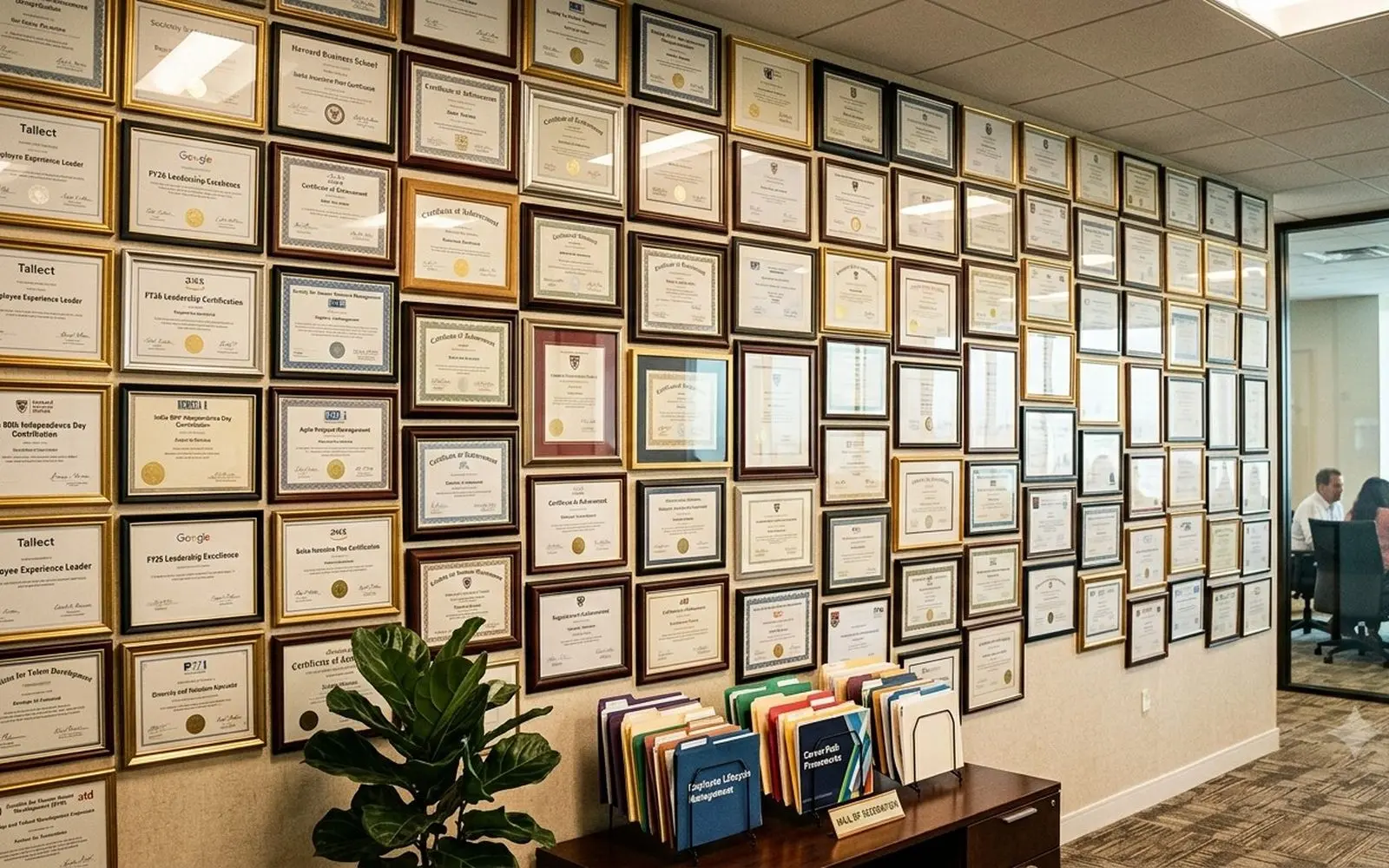
Rewards earn their place at milestones, anniversaries, project completions, certifications, not as a substitute for daily feedback.
Use rewards to reinforce milestones, not daily contribution
Service anniversaries, project completions, and certification achievements are appropriate for tangible rewards. Daily contribution should be recognised with specific feedback, not gift cards. Mix the two and both lose their meaning.
Make rewards personal, not standardised
The personalisation principle applies to rewards as much as it applies to recognition itself. A reward that matches what the individual actually values, public recognition for one person, private feedback or development time for another, carries more weight than a standardised catalogue item.
Budget for rewards as a retention lever, not a culture line
Voluntary turnover costs roughly 40% of annual salary for frontline roles, and up to 200% for managers, leaders, and technical staff. A rewards budget that prevents even one departure in the high-cost category pays for itself. Frame the budget conversation in those terms rather than as a discretionary culture spend. Culture spend is the first line finance cuts; retention spend is the line they protect.
Reward type | Best used for | Avoid using for |
|---|---|---|
Monetary bonus | Milestone achievements, project closure | Daily contribution |
Public recognition | Visible wins, team collaboration | Sensitive individual wins |
Development opportunity | High-potential employees, skill building | Universal entitlement |
Time off | Intense project periods, burnout risk | Routine performance |
Personalised gift | Service anniversaries, special occasions | Standardised catalogue item |
Choosing the right platform tier
Most organisations do not need an enterprise recognition platform. For teams under 200 employees, a lightweight channel-based system works on existing tools. For larger enterprises with complex recognition needs, enterprise-grade platforms provide the structure and scalability required to maintain consistency across distributed teams. The platform decision is a design decision, not a technology decision: a platform that supports the five pillars will succeed, and a platform that adds features but does not support the pillars will fail.
How Tallect approaches recognition
Built for the five pillars, not around a catalogue
Tallect is a modular Total Rewards platform built by Total Rewards practitioners for Total Rewards teams. The Recognition module supports day-to-day peer and manager moments, milestone rewards, and values-based awards natively, inside the same system as compensation planning, market benchmarking, and flexible benefits.
Coverage analytics are available from day one, so the measures that matter in 2026, manager giver coverage, recipient coverage, and time to recognition, are visible without building a reporting layer from scratch. And in Tallect, the AI agent layer inside the platform, helps managers write specific recognition prompts and flags teams with low coverage before the gap becomes a quarterly surprise.
5
recognition pillars supported natively
70%
manager coverage target visible from day one
3
recognition tiers in one system
12
step implementation sequence built in
Making the ROI case to finance
Recognition budgets fail when they are defended as culture spend. They succeed when they are defended as retention spend. The arithmetic is straightforward: state the organisation's voluntary turnover rate and average replacement cost, state the retention differential associated with high-quality recognition, state the programme cost, and show the break-even point in prevented departures.
A programme costing $50,000 annually that prevents two departures in the $80,000 replacement-cost category has a positive ROI in year one, according to WorldatWork research on recognition programme ROI. That is the conversation finance understands, in prevented cost rather than culture sentiment, and it's the version of the pitch that actually gets budget approved.
The ROI case for recognition lands with finance and investors alike when it is framed as prevented departures, not culture spend.
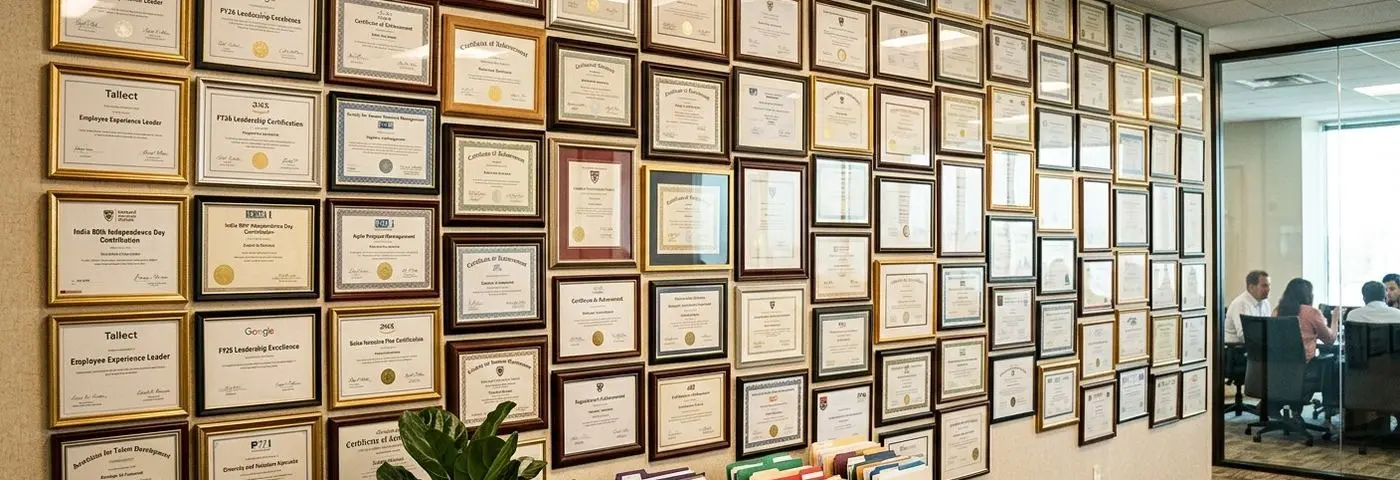
The 12-step implementation sequence for 2026
The five pillars have not changed. What has changed is the urgency of implementing them correctly, starting with the manager layer where roughly 70% of the engagement variance lives. This sequence puts that priority into a working order.
Infographic 04
The 12-step sequence

Steps are sequential by design intent. Revisit the programme design annually: the 2026 landscape is already different from 2022.
- Diagnose manager engagement separately from workforce engagement. The 2026 data shows they can move in different directions.
- Define the specific behaviours you want to reinforce, not "improve culture." Behaviours tied to company values or strategic priorities.
- Add the recognition agenda item to existing one-to-ones. Two minutes per meeting.
- Create the peer channel. Slack, Teams, or equivalent. Set the expectation: one post per person per week.
- Distribute the specificity template: "I want to recognise [name] for [behaviour], which had [impact]."
- Train managers on the template in a 30-minute session, not a half-day workshop.
- Track coverage metrics: percentage recognised in the last 30 days, percentage of managers giving recognition, average time to recognition.
- Review metrics monthly. Adjust the system if coverage is uneven or time-to-recognition is slow.
- Add rewards strategically. Milestones, not daily contribution. Personalised, not standardised.
- Report retention impact quarterly. Prevented departures, not participation rate.
- Revisit the programme design annually. The 2026 landscape is different from 2022.
- Choose a platform tier that matches your size and complexity. Enterprise platforms for large, distributed organisations.
Frequently asked questions
What has changed about employee recognition in 2026?
Three things: manager engagement has fallen sharply while non-manager engagement stayed flat, low turnover increasingly reflects market caution rather than satisfaction, and AI adoption now depends heavily on manager support. Together they mean recognition programmes have to start with managers, not employees, and be designed for a workforce that is primed to leave even when it isn't leaving yet.
What are the five pillars of recognition that still work?
Authenticity, personalisation, equity, embeddedness, and alignment to values. Treat them as a design framework rather than a checklist: hit all five and you get measurable retention and engagement gains, hit three or fewer and the effect doesn't outlast the mood it creates.
Why does the manager layer matter more than ever?
Managers account for roughly 70% of the variance in team-level engagement, and manager engagement itself has dropped nine points since 2022, concentrated among managers under 35 and female managers. A recognition strategy that goes straight to employees without addressing manager capability and engagement will not move the numbers.
What's a healthy manager recognition coverage rate?
Track the percentage of managers who gave recognition in the last 30 days, not just the percentage of employees who received it. A programme where 70% or more of managers gave recognition is sustainable. Below 50%, recognition is being carried by a shrinking minority and is vulnerable to turnover in that group.
How does peer-to-peer recognition affect retention?
Organisations with peer-to-peer recognition programmes are 34.8% more likely to improve retention and 35.7% more likely to show positive financial results. Peers see day-to-day contribution that managers often miss, and a peer channel scales recognition in a way manager-only recognition cannot.
When should rewards be used instead of specific feedback?
Reserve tangible rewards for milestones, such as service anniversaries, project completions, and certifications. Daily contribution should be recognised with specific feedback rather than gift cards; mixing the two dilutes both and makes rewards feel like an entitlement rather than a moment worth marking.
Does every organisation need an enterprise recognition platform?
No. Teams under roughly 200 employees can run an effective programme on a lightweight, channel-based system using tools they already have. Enterprise-grade platforms earn their cost for larger, distributed organisations that need consistency, central controls, and reporting across many teams and locations.
How do you make the ROI case for a recognition budget to finance?
State the organisation's voluntary turnover rate and average replacement cost, the retention differential associated with high-quality recognition, and the programme cost, then show the break-even point in prevented departures. A programme costing $50,000 a year that prevents two $80,000 departures has a positive ROI in year one, which is the conversation finance actually understands.
What's the first step in the 12-step implementation sequence?
Diagnose manager engagement separately from workforce engagement, since the 2026 data shows the two can move in different directions. Everything else in the sequence, from defining behaviours to training managers to adding rewards, builds on that baseline.
Why is low turnover not proof that recognition is working in 2026?
Because 51% of employees are actively watching for or seeking a new job even where turnover looks low. That combination describes people staying for reasons unrelated to satisfaction, such as economic caution or a cooling hiring market, rather than because recognition has earned their commitment.
The bottom line
None of this is complicated, which is exactly why it keeps getting skipped in favour of a platform shortlist. The five pillars haven't moved. What's changed since 2022 is how much urgency there is to get them right, starting with the manager layer, since that's where 70% of the engagement variance actually sits. Get the manager layer working, add the peer channel, and be deliberate about where rewards fit, and the rest of the design mostly follows.
This guide reflects Gallup's 2026 State of the Global Workplace research, industry programme effectiveness studies, and WorldatWork total rewards analysis. It is general information for recognition programme design and is not compensation consulting advice. Outcomes vary by organisation, industry, and programme design.